◂▸
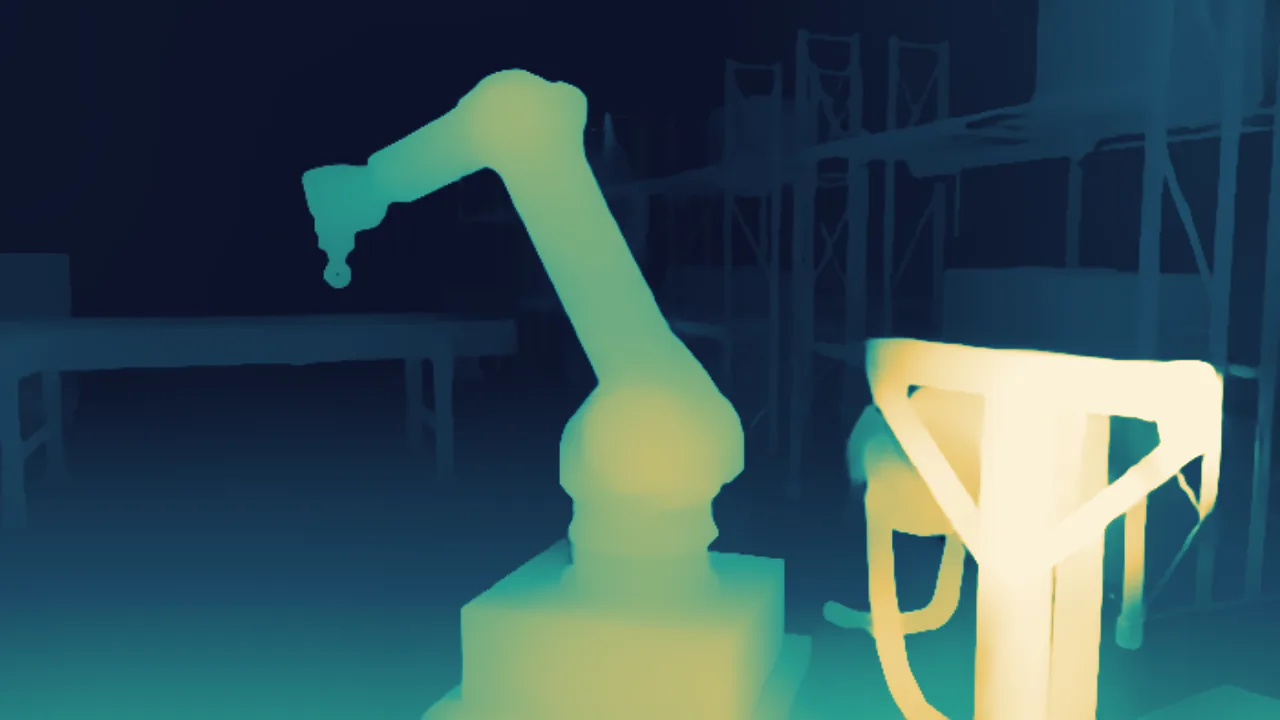
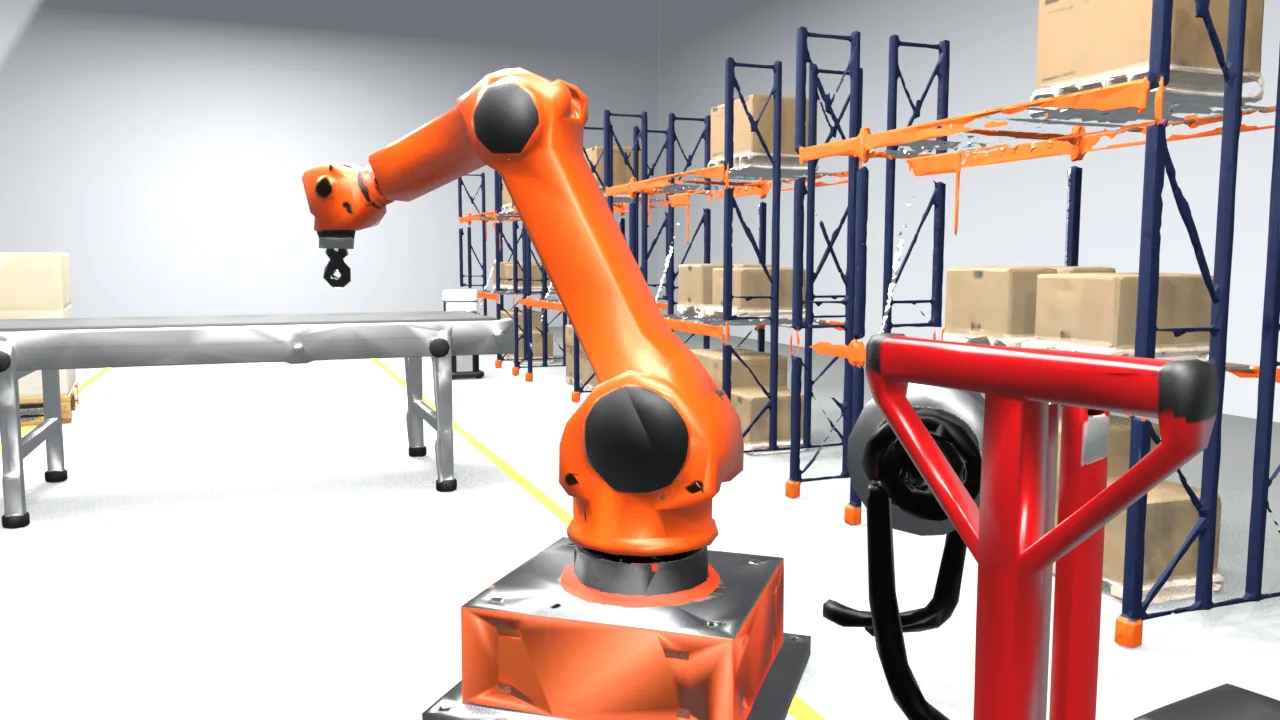
An AI depth model estimates how far away every pixel is, and a GPU shader moves pixels sideways by their depth to build a separate left and right eye. The whole chain runs live, from video decode to hardware encode, and adds about 19 ms at 720p. We scored the AI-made right eye against a real second camera.
What we tried
- Rendered our own test clip in Blender: three shots with hard cuts, a true right eye 65 mm away and true depth for every frame.
- Depth Anything V2 Small per frame, with the near/far range smoothed over time and reset at every cut.
- A GPU forward warp with a z-buffer, half the disparity per eye, and background-side hole filling.
- FFmpeg with NVDEC in and NVENC out on three threads, so frames stay on the graphics card.
- Video Depth Anything Small in streaming mode, as the flicker-free alternative.
- The same model in the browser through Transformers.js on WebGPU, with the warp as a shader.
What we measured
| Measure | Flat video | Our live pipeline | Note |
|---|---|---|---|
| Depth error vs a real second camera | 10.4 px | 2.1 px | Mean disparity error over 270 frames; AI scale set once per shot |
| Right-eye image match (PSNR) | 12.3 dB | 17.0 dB | The same warp fed true depth reaches 25.9 dB, so depth edges are the gap |
| 720p throughput | — | 46.6 fps | Median of 3 runs (44.4–48.7); 19.9 ms GPU per frame |
| 1080p throughput | — | 33.5 fps | Median of 3 runs; little headroom |
| Added latency, 720p live | — | 18.8 ms median, 21.9 ms p95 | |
| GPU memory | — | 0.29 GB at 720p | |
| Scene cuts caught | — | 2 of 2, no false alarms | |
| In the browser (WebGPU) | — | About 37 ms depth per frame | Same RTX 4070, Chromium |
What went wrong
- Feeding PNG frames capped the converter at 6.5 fps because decoding PNGs on the CPU was the bottleneck. A real H.264 feed through the hardware decoder removed it.
- Running the depth network eagerly from Python was launch-bound. Recording it once as a CUDA graph made it about three times faster.
- On a shared desktop GPU, settings that were only just real time fell behind whenever another app took GPU time, and latency climbed to 150–330 ms.
- Fed over SRT, frames arrived in bursts and queued: 102 ms median latency in that test, not yet tuned.
- Video Depth Anything flickers 14% less, but its reference streaming code ran at 15.5 fps, a third of the speed.
What happens next
- A TensorRT engine for the depth model, aiming at two 720p feeds per card.
- Real footage: an Insta360 clip and broadcast-style sport.
- Overlays kept flat, better hole filling, and WebRTC delivery measured glass to glass.
- A Unity player for Quest with a comfort test over 20 minutes.
Built with
- Depth Anything V2 Small Apache-2.0
- Video Depth Anything Small Apache-2.0
- PyTorch, Hugging Face Transformers BSD-3, Apache-2.0
- FFmpeg with NVDEC/NVENC LGPL/GPL
- Transformers.js, ONNX Runtime Web Apache-2.0, MIT
- Blender (test footage only) GPL
Next experiment
Peak swing told us nothing about how well a crane was driven →
Want this for your data?