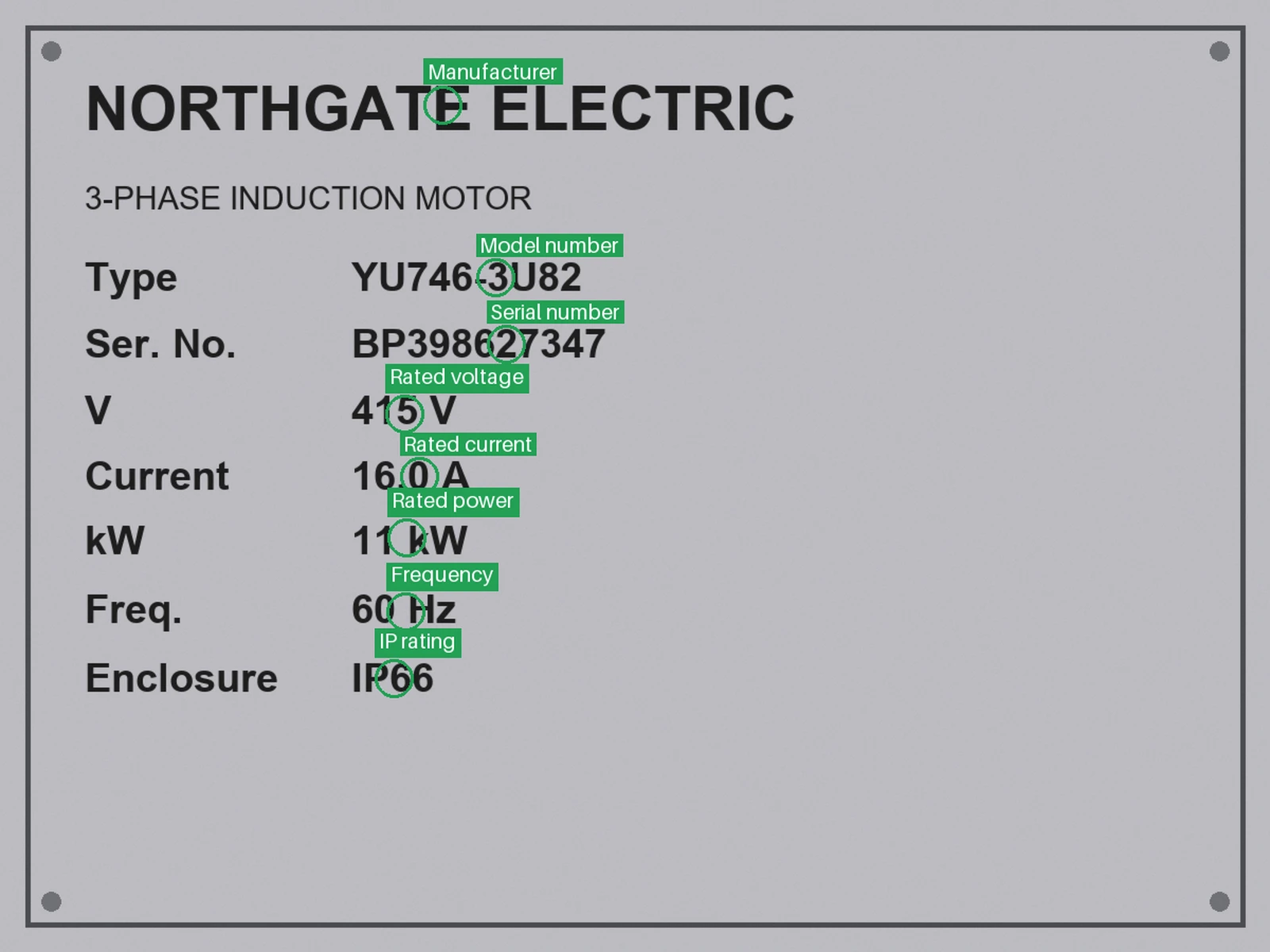
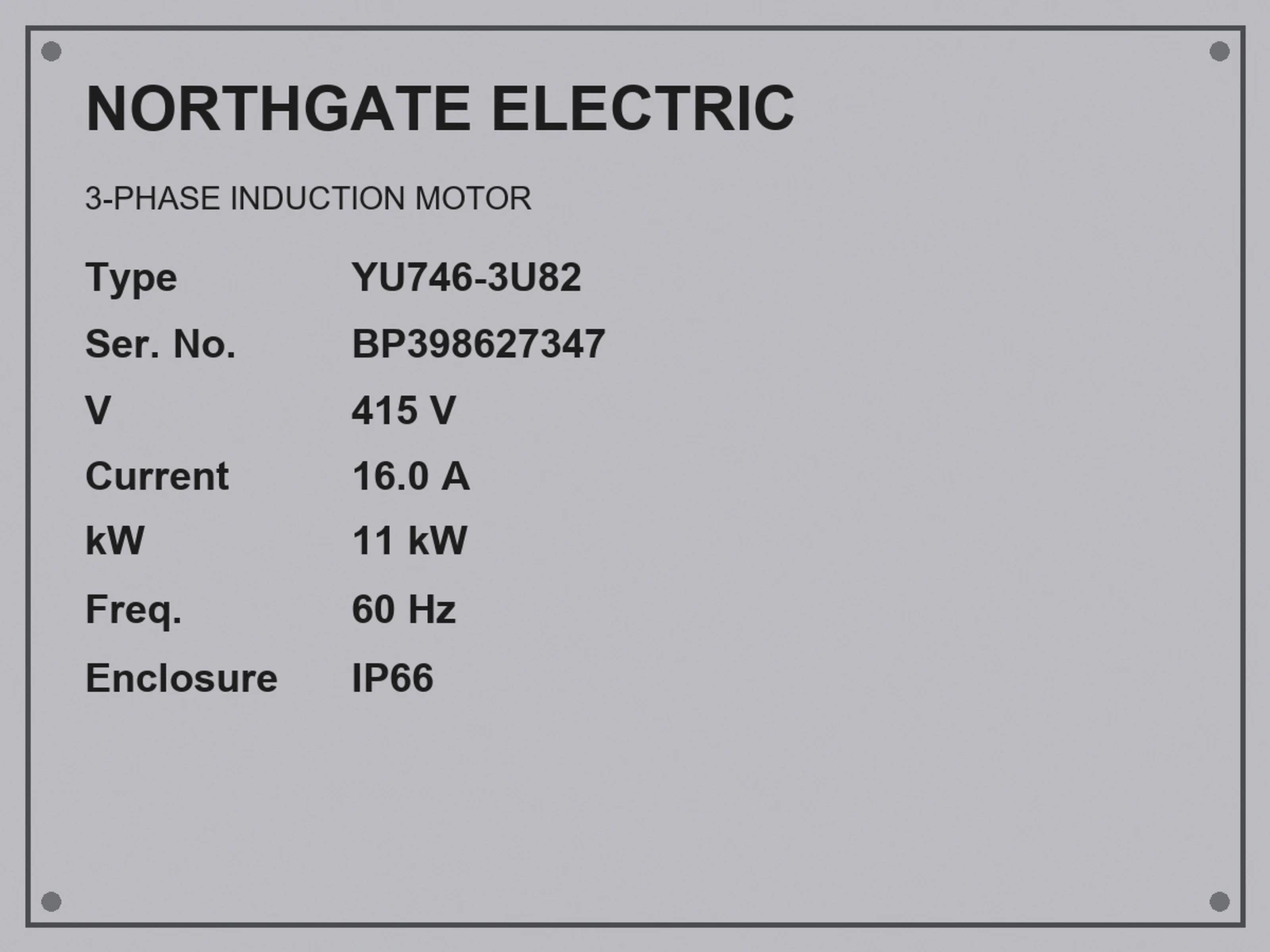
A field engineer photographs an equipment rating plate. CohereLabs North-Micro-Vision-Instruct, a 2.4B open vision model, reads the fields, then is asked to locate each value it read. Every field is tiered: green when it is located on the plate and passes its format check, amber when it is located but the value looks wrong for the field, and red when the model could not point at it, so the value is discarded and left for a person to type. The rule: a field the model cannot point at is a field the model invented. Nothing is saved without a person confirming it.
What we measured
| Measure | Run 1: boxes only | Run 3: points accepted | Note |
|---|---|---|---|
| Present fields shown green | 7.3% | 97.6% | |
| Green values that were right | 94.4% | 97.1% | |
| Location lands on the right text | 4.0% | 96.4% | |
| Values discarded (red) | 93.3% | 10.0% | Most red fields after the fix are fields absent from the plate, correctly left blank |
| Photos rejected as too blurred | n/a | 2 of 32 | |
| Time per plate | n/a | 29 s | RTX 4070, shared with other GPU work during the run |
What happens next
- Test on about 50 real site photographs, the go/no-go gate the product actually depends on.
- A stricter check for serial numbers.
- A hosted demo.

Get the book today: learn Gaussian splatting and apply it to real projects.
People keep asking how we build what you see here. The book walks students, educators and practitioners from a drone clip to a measured 3D in the browser, with hands-on labs and the code.
Launch price until 3 December.
Teaching a course (Level 5, Level 6 and up)? Email junaid.malik@simamdigital.com about a class discount.