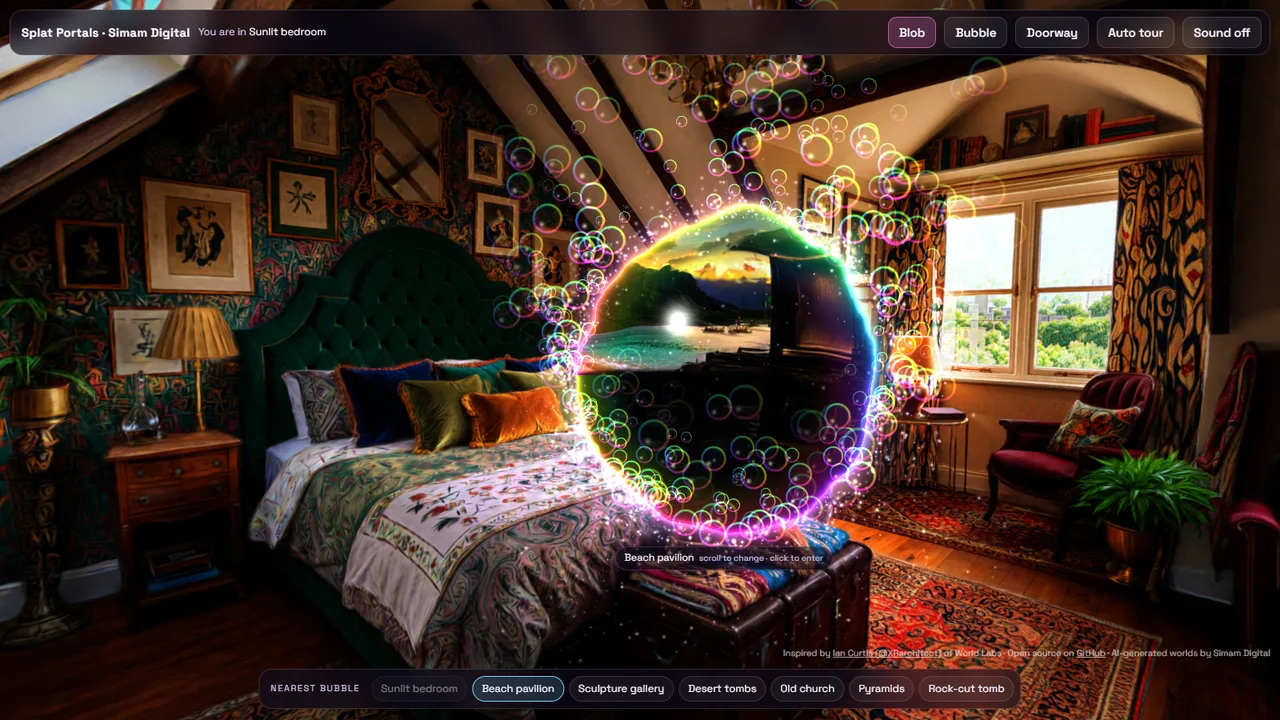
- 1 · Bubble
- 2 · Two worlds
- 3 · Step in
- 4 · Arrived
A rainbow-rimmed bubble floats in a sunlit bedroom, and inside it is a beach at sunset. Move and the beach shifts like a view through a window, because it is drawn from a second camera standing in the beach world exactly where you would be. Scroll on the bubble and the world inside changes: a sculpture gallery, desert tombs, an old church, the pyramids. Click it and it grows until it fills your view, with a warp of motion blur, and you are standing in that world, where a new bubble forms. Click anywhere else and another bubble opens there, each a window into a different world. The bubbles bob on soft springs, jiggle when they move or when you brush them, and drift back into view when you turn away. Sparks pour off the rim and are simulated in the room itself: they bounce off the real walls, bed and floor of the 3D scan, split when they hit hard, and settle as glowing dust. Inspired by a portal effect shared by Ian Curtis (@XRarchitect) of World Labs. The whole thing is open source: one HTML file built on three.js and Spark, with a write-up of how each part works.
What we measured
| Measure | Result | Note |
|---|---|---|
| Worlds | 7 | About 2.2 million splats each |
| Code | 1 HTML file | three.js and Spark, no build step, MIT licence |
| Bubbles at once | up to 3 | Each a live window into a different world |
What happens next
- Portals between real captured places, so a client can step from a lobby into a show flat.
- Lighter worlds for phones, with streamed levels of detail.