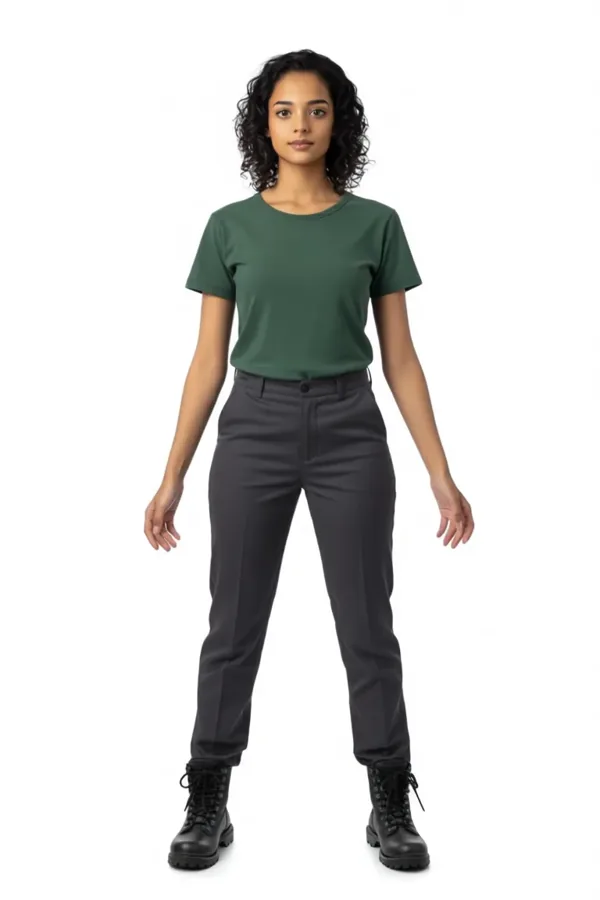
- 1 · Input
- 2 · New 3D
- 3 · The weak point
- 4 · September
We re-ran our September photo-to-character test with an open, commercially usable 3D generator released since. The same AI-made full-body image went in, and about two minutes later a textured 3D figure came out. Clothes, boots, folds and body shape were far cleaner than in September. The face and the back of the hair were not, and the reason is worth knowing before you try this yourself: the generator can only rebuild what the picture shows clearly. The person shown is AI-generated, not a real individual.
What we measured
| Measure | September | November | Note |
|---|---|---|---|
| Input | 1 portrait; body invented by an image model | the same full-body image, 600 × 900 | |
| Time to a textured 3D figure | n/a | about 2 minutes | 68 s to generate, 55 s to export |
| Output | rigged mesh, 3 motions | textured mesh, 11.6 MB, not rigged | |
| Clothes and boots | soft, blurred folds | crisp folds, laces and seams | |
| Face | soft but readable | waxy, pale, low detail | |
| Back of the hair | closed | holes |
What went wrong
- The face was about 80 pixels tall in the input. Clothes are large, simple shapes the generator can rebuild from few pixels; a face is small and full of detail it cannot invent well, so it came out waxy.
- The back of the head was never in the picture. The generator had to guess it, and on curly hair the guess left holes.
- The free GPU allowance ran out after one run, so we could not try other seeds to see whether the face was bad luck or the input.
What happens next
- The lesson, and our next test: give the generator a sharp full-body image with the face at least 300 pixels tall, and run several seeds at the top quality setting.
- A back view of the same person as a second input, so the hair is seen rather than guessed.
- Rig and animate only once the face holds up. Until then, the September character stays.
Get the book today: learn Gaussian splatting and apply it to real projects.
People keep asking how we build what you see here. The book walks students, educators and practitioners from a drone clip to a measured 3D in the browser, with hands-on labs and the code.
Launch price until 3 December.
Teaching a course (Level 5, Level 6 and up)? Email junaid.malik@simamdigital.com about a class discount.