◂▸
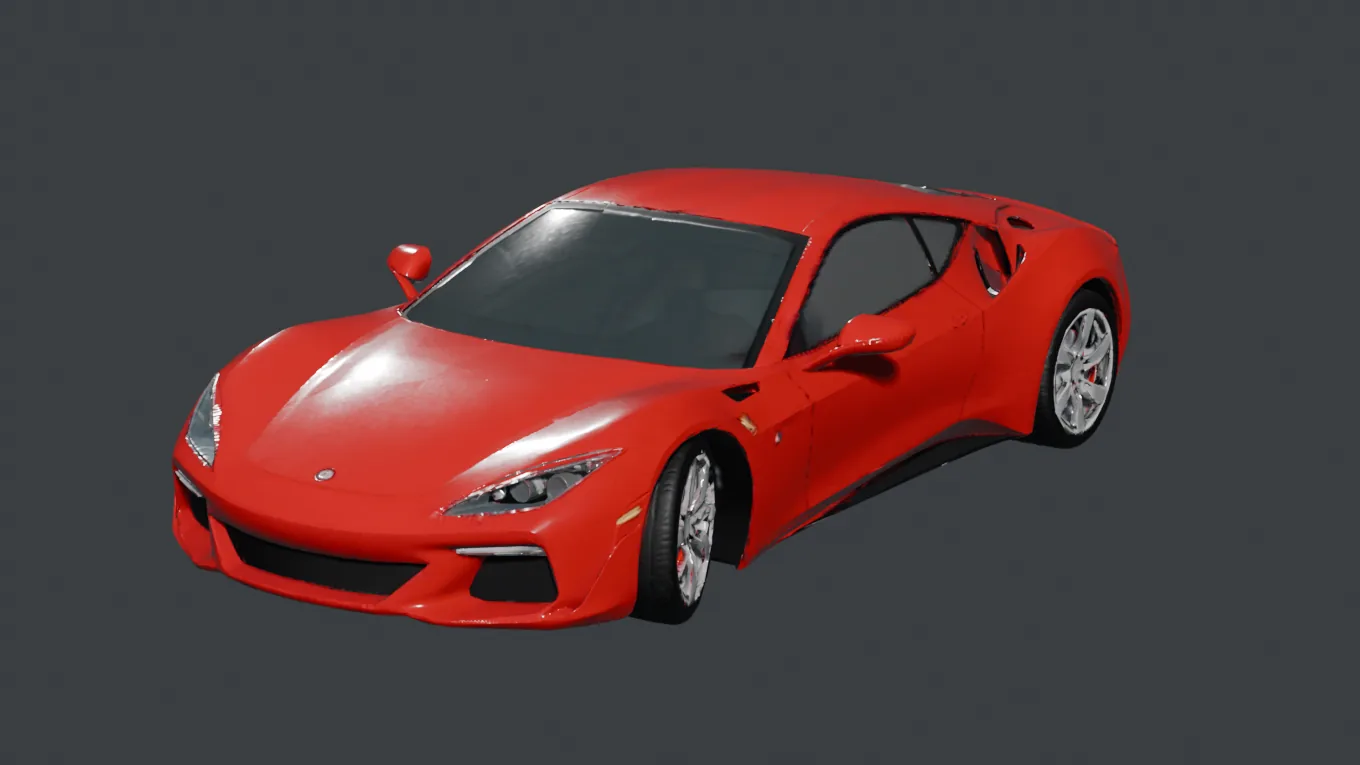
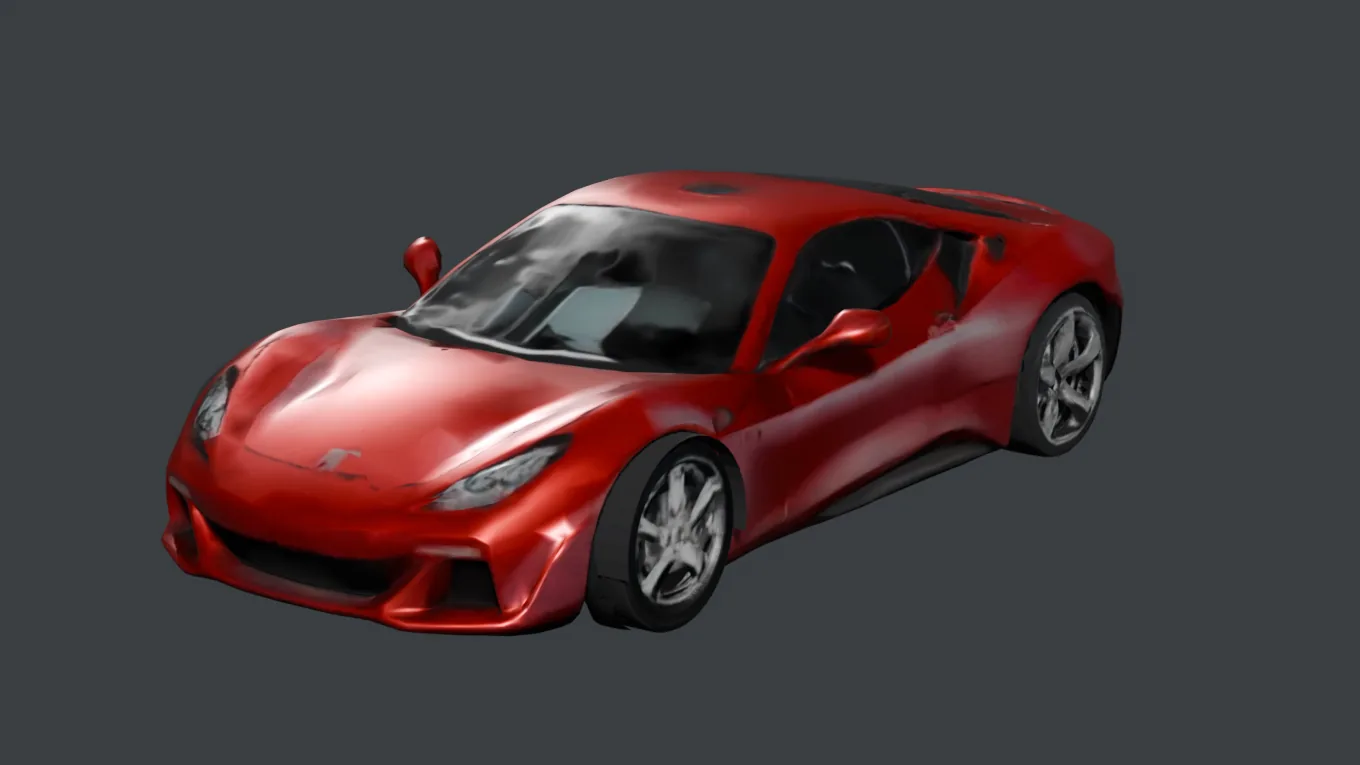
Every car in the /drive demo starts as one photograph. We swapped the 3D generation step for Meshy and rebuilt all four. Same photo, same camera, same length: drag to compare.
What we tried
- The same source photographs as the live demo, sent to Meshy's image-to-3D API with PBR textures, symmetry and a 50,000-triangle remesh.
- The existing rigging step unchanged: it finds the wheels and lamps, splits them off and makes the car drivable.
- Both versions rendered in Blender from identical cameras and scaled to the same length, so only the generator differs.
What we measured
| Measure | First pipeline | Meshy rebuild | Note |
|---|---|---|---|
| Triangles, rigged car (average of 3) | 52,841 | 40,391 | |
| Texture maps | colour, metal/rough | + surface detail (normal) | |
| Texture resolution | 2K | 2K | same budget |
| Wheels found and rigged | — | 4 of 4 on every car | |
| Generation time per car | — | 7–9 min | |
| Cost per car | free | 35 credits |
What went wrong
- We first judged shape by bounding-box width, and the new coupé scored 6 % worse. Bounding-box width includes the wing mirrors, and Meshy's stick out further. A single dimension is a poor quality score, so we compare renders from identical cameras instead.
- Meshy accepts JPEG and PNG only, not WebP, so inputs are converted first.
What happens next
- Rebuild the hero cars, then offer photo-to-drivable-car as a per-upload service.
Built with
- Meshy image-to-3D (Pro) outputs owned, commercial use
- Blender 5.1 GPL (tool only)
- Rapier physics Apache-2.0
Next experiment
One portrait to a walking 3D character →
Want this for your data?